


Innovative Approaches To Reducing Polyurethane Microfiber Pollution
Nov 05, 2025


Over 35% of microplastics in the world's oceans originate from synthetic microfibers, posing a direct threat to aquatic ecosystems. The most promising approaches to reducing polyurethane microfiber pollution include water-based and solvent-free production methods, adoption of bio-based materials, and circular economy strategies. Manufacturers lead change by innovating processes, while consumer awareness drives demand for sustainable products.
Sustainable manufacturing and circular economy practices create immediate impact, encouraging industry-wide adoption of eco-friendly solutions.
Key Takeaways
Polyurethane microfibers contribute significantly to ocean microplastic pollution, threatening marine life and ecosystems.
Adopting water-based and solvent-free manufacturing processes can greatly reduce chemical emissions and improve product quality.
Using bio-based and recycled materials lowers the carbon footprint of products and supports sustainability goals.
Implementing circular economy practices extends product life and minimizes waste, promoting responsible consumption.
Consumers can drive change by choosing eco-friendly products, participating in recycling programs, and supporting brands committed to sustainability.
Polyurethane Microfiber Pollution Overview
Environmental Impact and Microplastics
Polyurethane microfibers contribute significantly to the environmental impact of synthetic textiles. When these fibers shed during washing or wear, they enter waterways and eventually reach oceans. Microplastics from polyurethane microfibers persist in aquatic environments for decades. Scientists have observed that microplastics disrupt food chains and threaten marine biodiversity. Fish and other aquatic organisms ingest microplastics, which can lead to bioaccumulation of toxic substances. The environmental impact extends beyond marine life, affecting soil health and even entering the human food supply.
Experts warn that the environmental impact of microplastics is not limited to visible pollution. Invisible particles infiltrate groundwater and agricultural fields, posing risks to crops and livestock.
A recent study found that microplastics from polyurethane microfibers account for a growing percentage of microplastics detected in freshwater samples. The environmental impact of these particles includes reduced water quality and impaired ecosystem functions. Microplastics also act as carriers for harmful chemicals, increasing the environmental impact on both wildlife and humans.
Why Pollution Reduction Matters
Pollution reduction remains a critical goal for industries and communities. Polyurethane microfibers release microplastics throughout their lifecycle, from production to disposal. Reducing the environmental impact of these materials helps protect water resources and public health. Manufacturers who prioritize pollution reduction can minimize the release of microplastics and improve the environmental impact of their products.
Pollution reduction strategies:
Adoption of water-based manufacturing processes
Use of advanced filtration systems
Implementation of circular economy principles
Microplastics pose long-term challenges for waste management and environmental impact mitigation. By addressing the sources and pathways of microplastics, stakeholders can reduce the environmental impact and safeguard ecosystems for future generations.


Production and Use Challenges
Manufacturing Pollution Sources
Manufacturers face significant challenges in reducing pollution during the production of polyurethane microfiber. Traditional manufacturing methods often rely on solvents and non-renewable resources, which contribute to environmental degradation. Many companies now adopt eco-friendly processes to address these concerns. They utilize biodegradable components and invest in advanced production technology. These improvements enhance both texture and durability while lowering the environmental impact. Consumer demand for sustainable materials drives the shift toward greener practices.
Manufacturers increasingly adopt eco-friendly processes.
Utilization of biodegradable components is on the rise.
Advancements in production technology enhance texture and durability while reducing environmental impact.
The shift toward sustainable practices is driven by consumer demand for eco-friendly materials.
Sustainable manufacturing reduces the release of microplastics and minimizes overall pollution. Companies that prioritize these innovations set new industry standards and encourage others to follow suit.
Microplastics Release During Use
Polyurethane microfiber products shed microplastics during regular use, especially during laundering and abrasion. Several technologies aim to reduce this release. The table below highlights mechanisms and effectiveness:
|
Technology |
Mechanism |
Microfiber Reduction Rate |
|---|---|---|
|
Silicone Barrier Coating |
Reduces yarn-to-yarn friction |
60% |
|
PU Nano Membrane Film |
Creates cohesive sheath layer |
70% |
|
Plasma Surface Treatment |
Increases surface energy & cohesion |
50% |
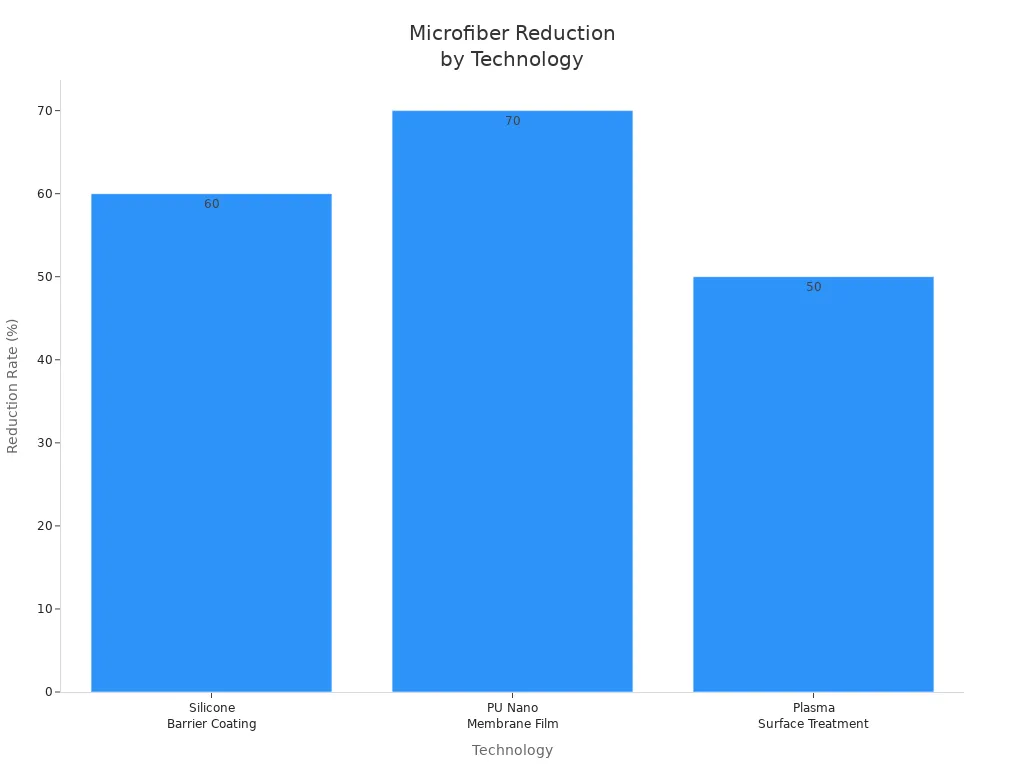
The NanoShield™ Coating from SzoneierFabrics forms a thin film on spandex–polyester yarns. This technology reduces microfiber release by approximately 65% after five laundering cycles. Combined use of low-friction finishes and optimized knitting structures can reduce shedding by over 70%. Studies from the University of Leeds Textile Institute in 2023 support these findings. These solutions help limit microplastics entering waterways and reduce overall pollution from synthetic textiles.
Innovative Solutions for Polyurethane Microfiber


Water-Based and Solvent-Free Processes
Manufacturers have shifted toward water-based and solvent-free processes to address the environmental impact of polyurethane microfiber production. These methods eliminate volatile organic compounds and reduce hazardous waste. Water-based coatings improve air quality in factories and protect worker health. Solvent-free formulations also lower energy consumption during manufacturing. North American regulations now require lower VOC emissions, which has accelerated the adoption of eco-friendly pu leather. Brands respond to consumer demand by investing in advanced technologies that enhance product quality and cost-effectiveness.
|
Evidence Type |
Description |
|---|---|
|
Regulatory pressures |
Regulations in North America are pushing for lower VOC emissions and sustainable materials, leading to eco-friendly synthetic leathers. |
|
Consumer demand for sustainability |
Increased consumer awareness about environmental issues drives brands to use sustainable materials. |
|
Technological advancements |
Innovations in manufacturing enhance the quality and cost-effectiveness of solvent-free options. |
|
Supply chain sustainability |
Companies are prioritizing sustainable practices, favoring materials with a lower environmental impact. |
Eco-friendly pu leather now dominates the North American market. Manufacturers use water-based polyurethane microfiber to create durable, high-performance products. These innovations set new standards for sustainability in the textile industry.
Bio-Based and Recycled Materials
Bio-based and recycled materials offer a promising solution for reducing polyurethane microfiber pollution. Companies source plant-based polymers and recycled plastics to produce pu leather with a lower carbon footprint. Bio-based polyurethane microfiber uses renewable resources such as corn or castor oil. Recycled materials divert waste from landfills and reduce the need for virgin resources. Brands that use these materials create eco-friendly products that appeal to environmentally conscious consumers.
Manufacturers blend bio-based polymers with recycled fibers to enhance the durability and softness of pu leather. This approach supports circular supply chains and reduces overall pollution. The use of bio-based and recycled polyurethane microfiber aligns with global sustainability goals and helps companies meet regulatory requirements.
Tip: Brands that invest in bio-based and recycled materials can differentiate their products and attract new customers seeking eco-friendly options.
Circular Economy and Product Life Extension
The circular economy model transforms how companies manage polyurethane microfiber products. Manufacturers design pu leather goods for durability and easy repair. Extended product life reduces waste and minimizes the release of microplastics. Brands encourage consumers to return used items for recycling or refurbishment. This approach keeps polyurethane microfiber in use and out of landfills.
Circular economy strategies include take-back programs, repair services, and upcycling initiatives. Companies collaborate with partners to create closed-loop systems for pu leather. These efforts support eco-friendly practices and reduce the environmental impact of synthetic textiles.
Circular economy benefits:
Reduces resource consumption
Minimizes waste generation
Extends product lifespan
Supports eco-friendly business models
Advanced Filtration and Recycling
Advanced filtration systems capture polyurethane microfiber during washing and processing. These technologies prevent microplastics from entering waterways. Manufacturers install filters in washing machines and industrial equipment to trap fibers before discharge. Recycling facilities process collected microfibers into new pu leather products, closing the loop on material use.
Innovators develop filtration membranes with high efficiency and low maintenance requirements. Brands partner with technology providers to implement these solutions at scale. The combination of filtration and recycling supports eco-friendly goals and reduces the environmental footprint of polyurethane microfiber.
Note: Advanced filtration and recycling technologies play a critical role in preventing microplastics pollution and promoting sustainable pu leather production.


Effectiveness of Solutions
Real-World Performance
Manufacturers have implemented several innovative approaches to reduce the environmental footprint of pu leather. Water-based and solvent-free processes have demonstrated strong performance in minimizing chemical pollution. Brands in North America now produce eco-friendly pu leather that meets strict regulatory standards. These products show reduced microplastics release during laundering and daily use. Advanced filtration systems installed in textile factories capture microplastics before they enter waterways. Companies that use bio-based and recycled materials report lower carbon emissions and improved durability. Circular economy models extend product life and decrease waste, which further reduces the impact on ecosystems.
A recent survey of textile producers found that eco-friendly pu leather maintains high quality and consumer satisfaction. The adoption of closed-loop recycling systems has led to a measurable decrease in microplastics detected in wastewater samples. Brands that prioritize sustainability see positive feedback from customers and increased market share. The impact of these solutions continues to grow as more manufacturers invest in green technologies.
Barriers to Adoption
Despite the proven benefits, several barriers hinder widespread adoption of innovative solutions in the polyurethane microfiber industry. Companies face fluctuating raw material costs, which affect the stability of supply chains. Stringent environmental regulations require significant investment in compliance and monitoring. Complex regulatory requirements create challenges for manufacturers seeking to introduce new eco-friendly pu leather products. Many brands feel pressure to meet consumer demands for sustainable goods while maintaining profitability.
Fluctuating raw material costs
Stringent environmental regulations
Complex regulatory requirements
Pressure to meet consumer demands for eco-friendly products
Manufacturers must balance these challenges with the need to reduce their environmental footprint. Some companies struggle to access reliable sources of bio-based polymers or recycled fibers. Others encounter technical limitations when scaling up water-based production methods. The impact of these barriers varies by region and market segment. Overcoming these obstacles requires collaboration between industry leaders, policymakers, and technology providers.
Industry Case Studies
Several industry case studies highlight the successful implementation of eco-friendly solutions for pu leather. SzoneierFabrics introduced a water-based polyurethane microfiber that reduced microplastics release by 65% after five laundering cycles. The company partnered with local recycling facilities to process used pu leather into new products, closing the material loop. Another brand, EcoTex, launched a line of bio-based pu leather using castor oil polymers. Their products achieved a 40% reduction in environmental footprint compared to conventional alternatives.
|
Company |
Solution Type |
Impact on Pollution |
Market Response |
|---|---|---|---|
|
SzoneierFabrics |
Water-based PU microfiber |
65% less microplastics |
Increased sales |
|
EcoTex |
Bio-based PU leather |
40% lower footprint |
Positive consumer feedback |
|
GreenLoop |
Circular economy model |
Extended product life |
Higher customer retention |
Brands that invest in advanced filtration systems report significant reductions in microplastics entering local waterways. These case studies demonstrate that eco-friendly pu leather can deliver strong performance and market growth. The impact of these innovations extends beyond individual companies, setting new standards for sustainability in the textile industry.
Note: Industry leaders who adopt innovative solutions not only reduce chemical pollution but also enhance their reputation and competitiveness.


Stakeholder Actions
Manufacturer Best Practices
Manufacturers play a critical role in reducing environmental concerns related to pu leather. They implement sustainable manufacturing processes to minimize waste and lower emissions. Many companies invest in water-based technologies and solvent-free formulations. These methods improve worker safety and reduce the impact on the environment. Leading brands design pu leather products for durability and recyclability. They collaborate with suppliers to source bio-based and recycled materials. Manufacturers also educate their teams about sustainable fashion and eco-friendly choices. Regular audits and transparent reporting help maintain high standards.
Best Practices Table
|
Practice |
Benefit |
|---|---|
|
Water-based production |
Reduces chemical pollution |
|
Use of recycled materials |
Lowers resource consumption |
|
Product durability focus |
Extends product lifespan |
|
Supplier collaboration |
Ensures material sustainability |
Tip: Manufacturers who prioritize innovation and transparency set new benchmarks for sustainable fashion.
Consumer Choices
Consumers influence the market by choosing pu leather products that address environmental concerns. They look for certifications and labels that guarantee eco-friendly choices. Many shoppers prefer brands that use recycled or bio-based materials. Consumers support sustainable fashion by extending the life of their pu leather goods through proper care and repair. They participate in take-back programs and recycling initiatives. Informed buyers ask questions about the origin and manufacturing of pu leather. Their decisions encourage companies to adopt sustainable manufacturing processes.
Choose certified eco-friendly pu leather
Support brands with transparent sustainability practices
Extend product life through care and repair
Participate in recycling programs
Note: Every purchase shapes the future of sustainable fashion and helps protect the environment.
Policy and Regulation
Policymakers drive change by setting standards for pu leather production. They address environmental concerns through regulations that limit harmful emissions and promote recycling. Governments offer incentives for companies that adopt sustainable manufacturing processes. Policy frameworks encourage collaboration between industry leaders and environmental organizations. Regulators monitor compliance and update guidelines to reflect new technologies. Public awareness campaigns inform citizens about eco-friendly choices and the impact of microplastics. Strong policies ensure that pu leather manufacturers remain accountable for their environmental footprint.
|
Policy Action |
Impact on Industry |
|---|---|
|
Emission limits |
Reduces pollution |
|
Recycling incentives |
Boosts material recovery |
|
Certification requirements |
Improves product transparency |
|
Public awareness campaigns |
Educates consumers |
Policymakers who prioritize sustainability create a supportive environment for innovation and responsible production.
Innovative solutions such as water-based processes, bio-based polymers, and circular economy models have proven effective in reducing polyurethane microfiber pollution. Stakeholders must act now to accelerate adoption of environmentally friendly materials and advanced recycling systems.
Support brands that prioritize sustainability.
Advocate for industry-wide change.
Every choice shapes the future of textile production. Explore more resources to stay informed and drive positive impact.

FAQ
What makes polyurethane microfiber pollution a major concern?
Polyurethane microfiber pollution affects water quality and harms aquatic life. These microfibers persist in the environment for years. They contribute to the global microplastics crisis. Addressing this issue supports sustainability and protects ecosystems.
How do water-based and solvent-free processes improve sustainability?
Water-based and solvent-free processes reduce chemical emissions and lower energy use. Manufacturers who adopt these methods enhance sustainability. These processes also improve worker safety and product quality. Brands gain a competitive edge by meeting sustainability standards.
Why should manufacturers invest in bio-based and recycled materials?
Bio-based and recycled materials help manufacturers reduce resource consumption. These materials support sustainability by lowering carbon footprints. Companies that use them meet regulatory requirements and appeal to eco-conscious consumers. The shift drives industry-wide sustainability improvements.
What role does the circular economy play in sustainability?
The circular economy extends product life and reduces waste. Manufacturers design goods for repair and recycling. This approach keeps polyurethane microfiber in use and out of landfills. Circular models promote sustainability and encourage responsible production.
How can consumers support sustainability in polyurethane microfiber products?
Consumers choose products made with sustainable materials. They look for certifications and participate in recycling programs. Responsible purchasing decisions drive demand for sustainability. Consumers also extend product life through proper care and repair.
You Might Also Like
-

Sofa Microfiber Upholstery Fabric Vinyl Leather
-

Smooth Synthetic Vegan Material PVC Leather For Luggage Tags
-

Flexible Micro Fiber Synthetic Suede Leather Material For...
-

1.6mm Soft PU Leather Micro Fiber Imitation Auto Trim Mat...
-

Anti Scratch PU Synthetic Leather Imitation Ball Making F...
-

High Performance Faux Suede Microfiber Leather Material F...